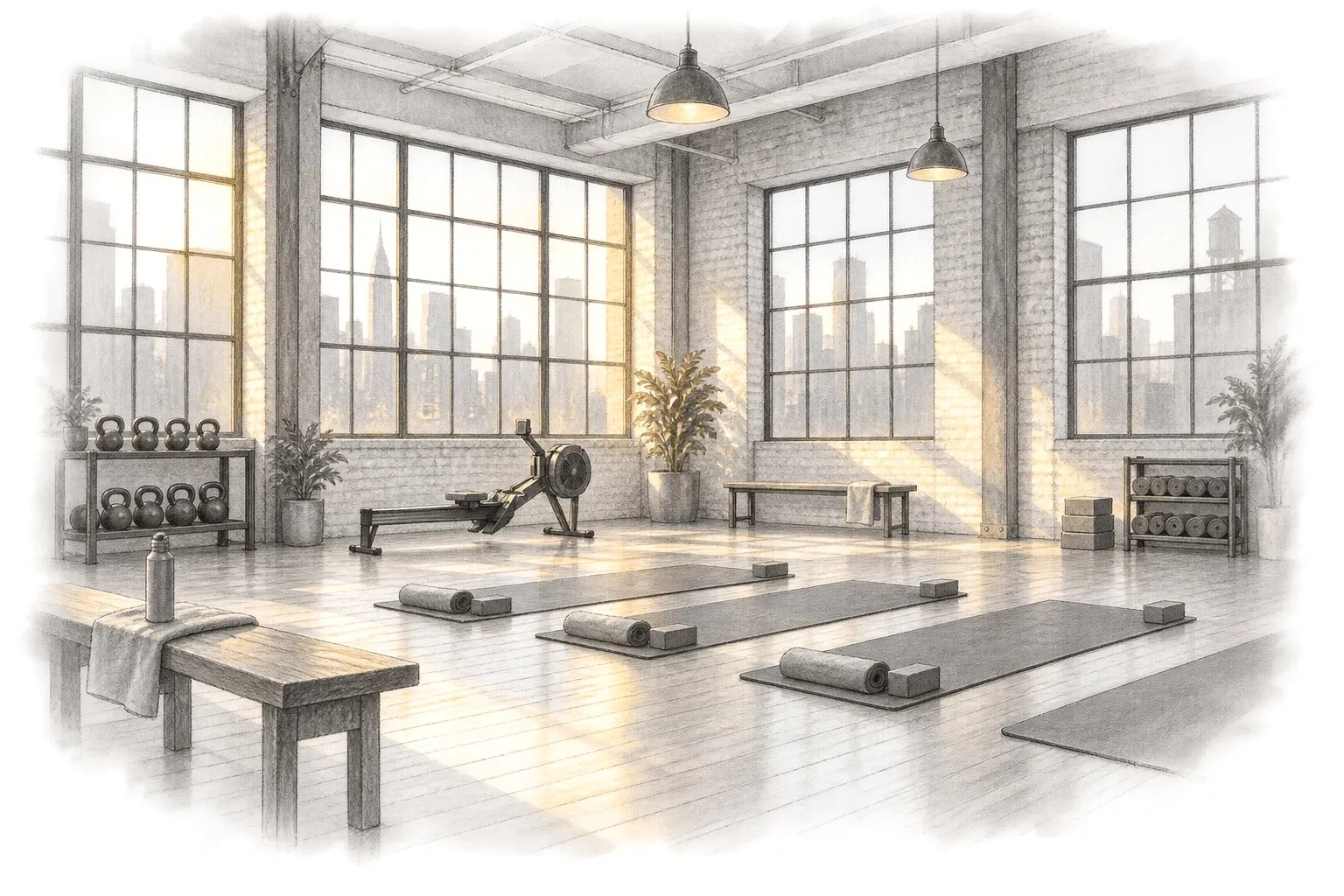
Websites & local marketing for gyms and fitness studios in New York
People pick a studio by location and schedule. After that, it’s about how the first class feels. We build a site that shows today’s classes and makes the trial easy to book. Memberships are spelled out, with no fine-print surprises.
Most new members look for a studio close to home or work: “pilates near me,” “boxing gym Long Island City,” “yoga before work Midtown.” They check class times against their week, look at the room and the coaches, and hunt for an intro offer. Then they want to know what it costs and how hard it is to cancel.
They check the schedule first: is there a class at 6:30 a.m. or after 7 p.m.?
They look for a first-class or intro offer that makes trying you low-risk.
They want a good look at the space and the coaches before they commit.
They compare memberships, class packs and drop-in prices side by side.
They read the cancellation terms, especially if a gym contract burned them before.
Some find you on a class app first, then come to your site to buy direct.
Your website must-haves
A live class schedule
The schedule from Mindbody, Glofox, Mariana Tek or whatever you use, built into your site and readable on a phone. No screenshot that’s out of date by Tuesday.
Trial sign-up in under a minute
A clear intro offer, a short form or a direct booking link, and a confirmation that says what to bring and where to go.
Memberships, explained
Every option on one page, from drop-ins to class packs to memberships. Each one says what’s included and how billing works, and how to cancel is right there too. Clear terms earn trust and keep you on the right side of New York’s rules.
Coach profiles
Photos, certifications, the classes each coach leads and a line about their style. People come back for a coach as much as for a workout.
The space, shown honestly
Real photos and a short video of the room and the equipment. Show the showers and lockers too, plus the nearest train and where to leave a bike.
Online cancellation for online members
If people can join on your website, they need a clear way to cancel there too. We set that up with your booking software, so it’s a link, not a hunt.
First-visit info
What to wear and when to arrive. Then a few honest lines on what the first class feels like. It calms nerves and helps first-timers actually show up.
Getting found by people nearby
Fitness searches follow commutes and routines. People want a studio near the office or the apartment, at a time that fits. Your Google profile and your class pages should answer the same questions, and your reviews should too. Where are you? When are the classes? What kind of training is it?
Choose the category that fits, like “Pilates studio,” “Yoga studio,” “Boxing gym” or “Gym,” and list class types as services.
Turn on booking from Google through your scheduling software, if it’s a Reserve with Google partner.
Give each main class style its own page, like reformer Pilates, spin or strength, so specific searches land on it.
Update your profile with photos and new class times whenever the schedule changes.
Ask members for a review after their first month, once the habit has stuck.
Ads that make sense
Fitness ads work best with a concrete offer and a short trip. A first-class deal shown to people a few minutes from the studio tends to do more than a general brand ad.
Instagram and Facebook ads with real class footage and the trial offer, shown to people nearby.
Google search ads for searches like “pilates near me,” with the trial page as the landing spot.
Local Services Ads list personal trainers and yoga studios in some areas; worth a look if that’s your business.
The January rush and the September restart planned weeks ahead, not thrown together the night before.
AI that fills classes
Most studio questions repeat: what to bring, which class suits a beginner, how the intro offer works. AI can answer those and book the trial at any hour.
A website assistant, labeled as AI, that suggests a beginner-friendly class and books it through your schedule.
Fast follow-up for trial sign-ups: a reminder before class and a friendly check-in after.
Win-back messages for members who haven’t booked in a while, sent only to people who agreed to hear from you.
Quick answers to membership questions, so nobody waits until the front desk is free.
Rules to respect
New York’s health club law covers studios, gyms, martial arts schools and similar places. Contracts must let new members cancel within three business days, with that right stated in bold type.
Clubs must accept cancellations through methods including website, email, phone, mail or in person. If members can join on your website, they must be able to cancel on it too.
Renewals have their own windows: members can cancel an annual renewal within 15 business days after it takes effect, and a monthly renewal within three business days.
Auto-renewing memberships must show the price, how often you’ll charge and how to cancel next to the sign-up, before the member agrees, followed by a confirmation they can keep.
Not legal advice. These points summarize New York’s General Business Law on health clubs and automatic renewals as of October 2026. Have your lawyer review your membership terms.
Common fitness website mistakes
A schedule posted as an image that nobody updated.
Prices hidden behind “contact us for rates.”
A trial offer that takes six screens and a new account to claim.
Membership terms in tiny print, with cancellation by letter only.
No photos of the actual studio, just stock athletes.
Can you connect our website to Mindbody or another booking system?
Yes. We bring the schedule and booking from the tool you use into your site, style it to match and test it on phones. If the tool’s widget is slow, we link to a clean booking page instead.
Should a fitness studio show prices on its website?
Yes. People compare studios on price and terms, and hiding them sends visitors to a studio that doesn’t. At a minimum show the intro offer, a class pack and a monthly option.
Do we have to let members cancel online in New York?
If they joined on your website, yes; the state requires you to accept cancellation there too. You also have to accept cancellations by email, phone, mail or in person. We build the cancel path into the site and your booking software.
Are class apps like ClassPass good or bad for our studio?
They can fill empty spots and bring new faces, and some of those people will want to buy direct later. Your site should make buying direct the easy choice for anyone who’s already tried a class.
How do we turn trial visitors into members?
Make the trial easy to book, send a friendly reminder and follow up the same day with a clear next step. AI follow-up can handle the sending; your coaches handle the welcome.
Do we need a separate page for each class type?
For the main ones, yes. Someone searching “reformer Pilates Astoria” wants to land on that class, not on a general list of everything you offer.
Get a free website review
Send us your website address. We’ll look at it the way your customers do and tell you, in plain English, what to fix first.